

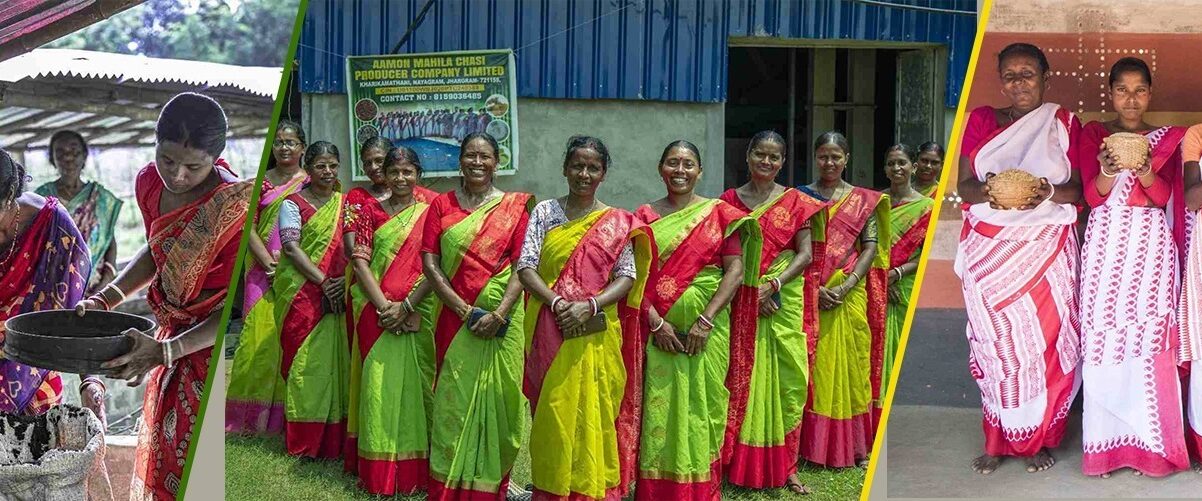
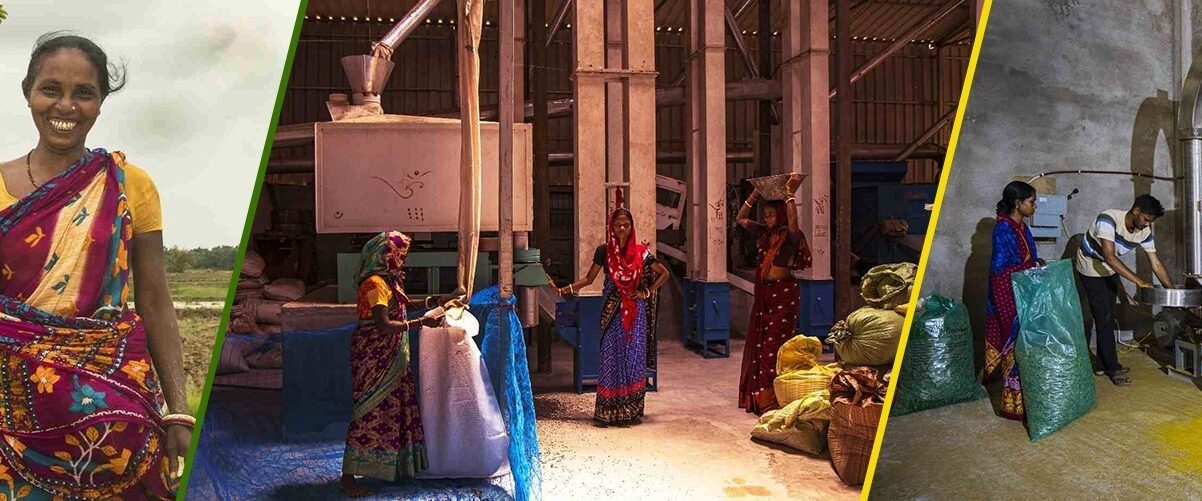
Building Women-Owned Farm Enterprises
PRADAN’s Farmer Producer Organization (FPO) Model and the FPO Resource Center (FPORC)
Small and marginal farmers constitute the backbone of agriculture across much of central and eastern India. Yet fragmented landholdings, climate variability increasing vulnerabilities of rainfed agriculture, high production risks, limited access to capital and technology, and weak market bargaining power continue to constrain their ability to generate sustainable and remunerative livelihoods.
For women farmers, these challenges are compounded by the changing rural economy. With increasing male migration, women have been managing agriculture work alongside household responsibilities. At the same time, agriculture has been steadily losing its prospect for the rural youth because of uncertain returns. New technologies and better market opportunities often remain more accessible to bigger farmers who have greater capacity to invest.
PRADAN’s response to this situation has been to centerstage the women in the rural household in all our interventions and help her gain the confidence, skills and identity of a “farmer” from that of a labourer on her own family farm. Subsequently, it is to mobilise such women-farmers, to build farmer-owned institutions that help smallholders overcome the disadvantages of scale. Farmer Producer Organizations (FPOs) provide a platform through which farmers can aggregate production, access services, invest collectively, negotiate with markets, undertake value addition, and build stronger economic institutions.
PRADAN has promoted 93 FPOs—84 agriculture FPOs and 9 livestock FPOs—with women as the shareholders and institutional owners. In FY 2025–26, these FPOs together represented 108,659 shareholders, with ₹110 million in share capital and an aggregate business turnover of ₹719.214 million. This translates to an average of approximately 1,168 shareholders, ₹1.18 million of share capital and ₹7.73 million of turnover per FPO.
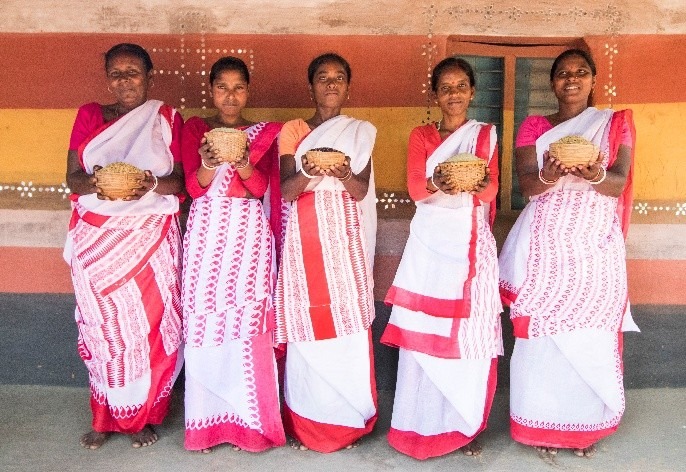
The objective, however, is not simply to create FPOs or increase turnover. The larger ambition is to develop viable, women-owned enterprises that are institutionally strong, commercially relevant and capable of creating lasting value for their members.
FPORC: Building a Replicable FPO Development Model
The Farmer Producer Organization Resource Center (FPORC) was established by PRADAN as a Center of Excellence to strengthen FPOs and provide specialised support to the teams that promote and nurture them.
FPORC has evolved from providing functional handholding support to developing systems, tools, knowledge and models that can be replicated across geographies. Its role today spans institutional development, business strategy, finance and compliance, technology, market development, capacity building, evidence generation, partnerships and resource mobilisation.
The emerging FPORC approach is based on a simple principle:
FPO development requires simultaneous strengthening of production, institution, business, finance and markets, and not treat them as isolated interventions.
This has led to a shift towards Model FPOs, Nodal FPOs and cluster-based development, with deeper investment in selected commodities and geographies.
Model FPOs through the Agriculture Production Cluster approach
FPORC has been working with field teams to develop Model FPOs around specific production clusters and commodities. Selected FPOs are being supported around commodities such as mustard, turmeric, pulses, mango, high-value crops, onion etc.
The Model FPO approach brings together the entire enterprise ecosystem:
Production → aggregation → infrastructure → working capital → processing → branding → market linkage
Instead of supporting dispersed activities across a large number of commodities, the approach concentrates expertise and investment around selected value chains. This creates the possibility of developing demonstrable models that can subsequently be adopted and scaled elsewhere.
The approach also recognises that an FPO cannot become a competitive enterprise without a strong production base. Consequently, FPORC connects enterprise development with Agriculture Production Clusters, technology adoption, irrigation, improved planting material, protected cultivation and regenerative agriculture.
Nodal FPO: Creating scale without losing farmer ownership
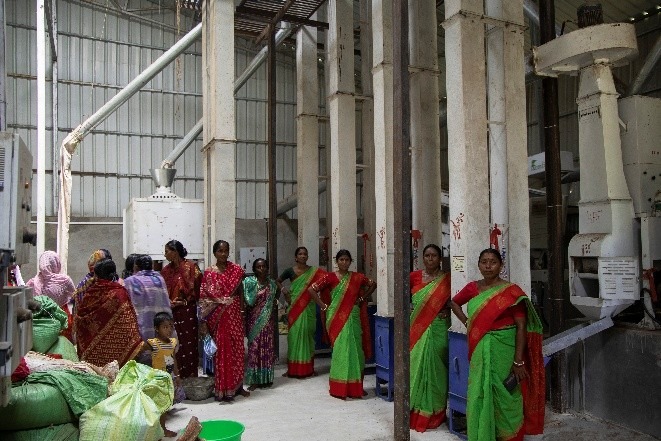
Lack of access to markets is not unique to smallholder farmers. Small FPOs also often struggle to access larger markets individually. Their volumes are fragmented, transaction costs are high and they may lack the specialised capabilities required for market acquisition, branding, and institutional sales
FPORC is therefore piloting the Nodal FPO model.
Under this model, one FPO functions as a market-facing entity for a group of FPOs. Member FPOs remain closely connected to production and farmer mobilization, while the Nodal FPO builds scale around aggregation, marketing, branding, institutional sales and retail.
The Ghaghra Nodal FPO in Jharkhand has demonstrated this model through multiple channels, including bulk procurement, Rural Retail Marts, institutional sales to hotels, restaurants and other large customers, and retail supply to urban markets such as Ranchi. It achieved ₹32.5 million in business turnover during FY 2025–26.
Following Jharkhand, the Nodal FPO work has also been started in the states of West Bengal, Madhya Pradesh and Bihar from 2026-27 financial year.
The emerging lesson is that scale does not necessarily require every FPO to build every function independently. Shared market-facing institutions can reduce duplication, improve efficiency and enable small farmer enterprises to access larger markets.
Contributing to India’s 10,000 FPO Mission
PRADAN’s experience in building women-owned FPOs has also contributed to the Government of India’s Central Sector Scheme for Formation and Promotion of 10,000 FPOs, a national initiative designed to strengthen farmer collectivisation, improve economies of scale, enhance bargaining power and support farmers in developing sustainable enterprises. The scheme provides a national platform for accelerating the formation and nurturing of farmer-owned organizations.
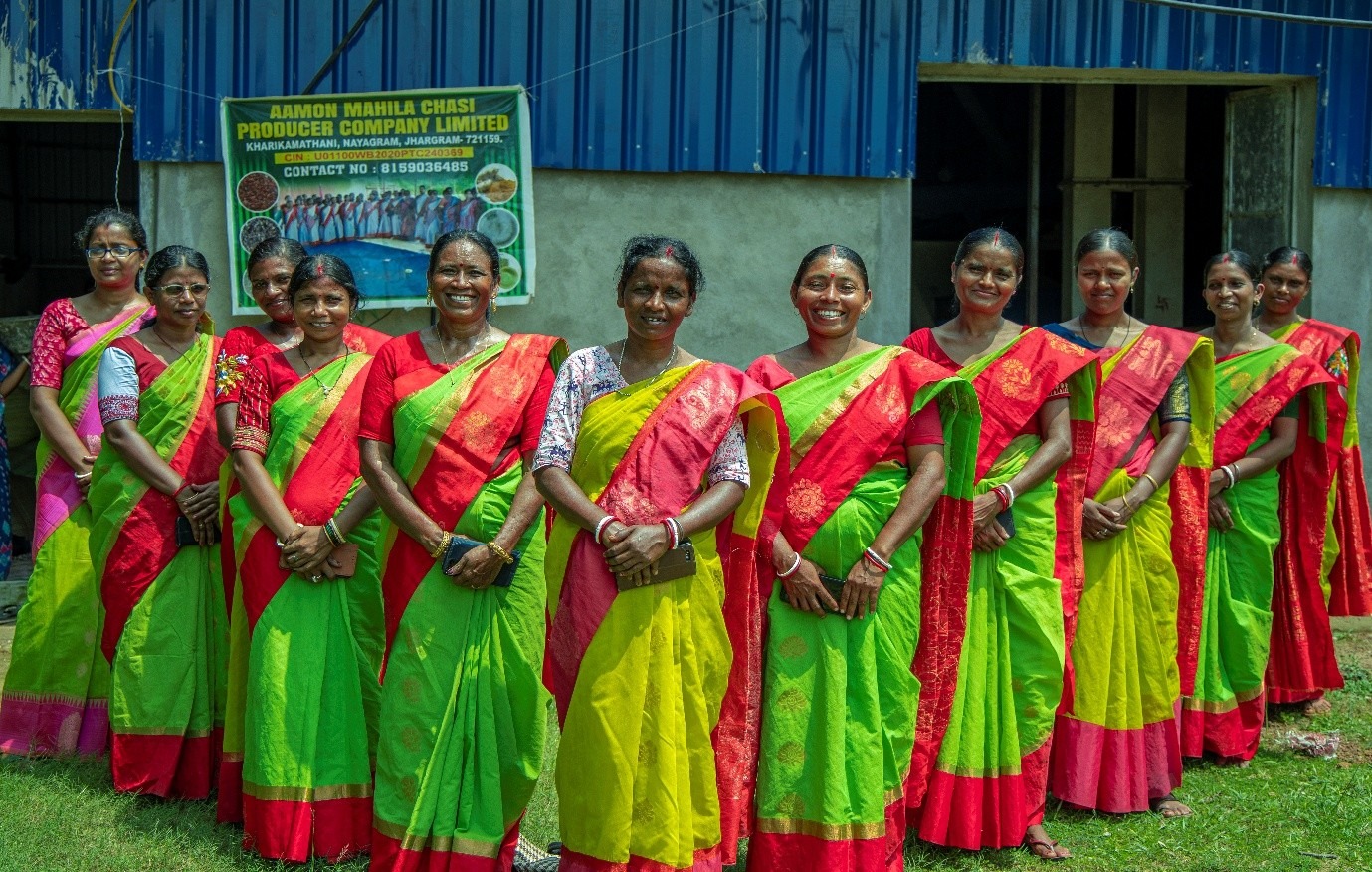
Under the scheme, PRADAN has been engaged as a Cluster Based Business Organization (CBBO) and has contributed to the promotion and nurturing of 44 FPOs.
PRADAN’s contribution has extended beyond the formation and registration of FPOs to the more complex task of building institutions that can function as viable farmer-owned enterprises. Its experience has informed support around farmer mobilisation, governance, business planning, financial and compliance systems, agriculture technologies, infrastructure, market linkage, capacity building and enterprise development.
FPORC has brought its wider learning on women-led FPO development into this engagement while also using the experience generated through the national programme to strengthen its own tools, systems and models. This includes practical approaches to FPO incubation, business planning, digital MIS, financial systems, market development, professional capacity building, and performance assessment.
The experience reinforces an important lesson for the wider FPO movement: formation is only the beginning. FPOs need sustained institutional handholding, working capital, production clusters, stronger governance, professional capabilities, and market relationships over several years to mature into sustainable enterprises.
The 10,000 FPO mission therefore provides an important opportunity to move the national conversation from “How many FPOs have been formed?” to “How many farmer-owned enterprises are becoming viable, resilient and valuable to their members?"
Moving from Production to Value: Technology, Processing, and Enterprise Development
FPORC’s strategy increasingly focuses on enabling FPOs to move beyond primary aggregation towards higher-value and service-led enterprise models.
During FY 2025–26, several technologies and production models were piloted with FPOs and farmer members:
- Drip irrigation and mulching for high-value crop cultivation across 6 acres in Lohardaga and Gumla.
- Protected cultivation through shade nets with 43 farmers and 43 shade-net structures across Lohardaga, Gumla, and Palkot.
- Grafted crop cultivation with approximately 450 farmers across Lohardaga, Gumla, Jhalda, and Chaibasa.
- Regenerative high-value cash crop production with 82 farmers.
These pilots are not viewed merely as demonstrations. The longer-term objective is to develop FPO-led service delivery models, where farmer-owned institutions can facilitate access to technology, planting material, technical knowledge, and markets at scale.
PRADAN is also promoting a portfolio approach to commodities. Perishable commodities can provide higher returns but carry higher production and market risks, while non-perishable commodities may offer relatively lower margins but greater stability. Combining both within an FPO’s business portfolio can help create a more balanced enterprise model.
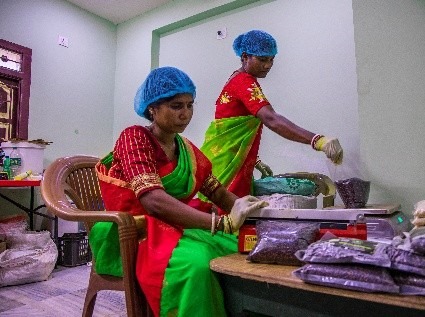
Processing and value addition form another important pathway. FPOs are being supported to improve product development, packaging, quality systems, processing efficiency and branding. Products such as mustard oil, spices, rice, pulses, millet flour, cookies, dried vegetables and organic inputs have entered organised market channels through FPO-led brands.
The ambition is to build enterprises that capture a greater share of value within farmer-owned institutions, rather than limiting FPOs to aggregation and primary trading.
Systems that make FPOs Sustainable
A farmer-owned enterprise requires more than business opportunities. It needs reliable systems for finance, governance, compliance, people management, data management, and decision-making.
FPORC has therefore invested significantly in developing common systems and tools that can be used across FPOs.
Digital enterprise management
The FPO Enterprise Resource Planning (ERP) system has evolved into an integrated platform for managing critical information related to shareholders, Boards of Directors, share capital, business transactions, compliance, and organizational performance.
A major milestone has been the integration of ERP with Tally, enabling stronger linkage between operational and financial information. The system is also being expanded with additional modules, including credit-related functionalities.
The broader objective is to move FPO management from fragmented record keeping towards data-informed enterprise management.
Finance and compliance
FPORC has established systems for financial review, accounting support and compliance monitoring. FPOs receive structured support around requirements relating to corporate affairs, taxation, GST, FSSAI and other regulatory systems.
A standardized approach to finance and compliance provides the foundation for institutional credibility and improves the ability of FPOs to engage with financial institutions, investors, buyers, and other partners.
Performance measurement
FPORC has also developed an FPO grading framework covering multiple dimensions of organizational health—including business performance, operations, governance, social objectives, accounts and compliance.
The tool is being refined to better capture the realities of different FPOs and to shift performance conversations beyond turnover alone towards profitability, institutional strength, member ownership and sustainability.
Investing in Women’s Leadership and Institutional Ownership
PRADAN-promoted FPOs are distinctive in being women-owned and women-governed farmer institutions
The FPO is therefore not only an economic platform; it is also an institutional space through which women farmers engage with markets, financial systems, technology, and enterprise decision-making.
FPORC has invested in strengthening Boards of Directors, CEOs, accountants and FPO anchor persons. During FY 2025–26:
- A Professional Development Programme was conducted with 20 participants.
- 23 professionals participated in Training of Trainers programmes.
- Nine structured training modules for Boards of Directors were developed in collaboration with partners.
- Gender-related modules and approaches were integrated into FPO capacity building.
A key principle is to make the language of business and governance accessible to rural women leaders. This is why FPORC has worked with specialist organizations to develop practical and context-appropriate learning materials for FPO Boards.
The goal is not simply to train women to perform governance functions, but to enable them to understand their enterprise, question decisions, participate in strategy and exercise ownership over their institution.
Partnerships as an Engine for Innovation
FPORC follows a partnership-led model to bring specialized knowledge, technology, finance and market capabilities into the FPO ecosystem. Collaborations have been developed around several critical areas: affordable and blended finance, agricultural research and technology, climate-resilient production, food processing and product development, digital solutions, market access, branding and retail, and capacity building for FPO leadership and management.
These collaborations enable FPORC to bring expertise that may not be available within FPOs or field teams, while ensuring that innovations are tested in real production and market contexts. The approach is particularly focused on converting external expertise into practical, FPO-owned solutions—for example, technology-supported production models, improved processing and packaging systems, new market channels, digital member-connect platforms and financing solutions.
The longer-term objective is to develop partnerships as part of an open ecosystem for farmer enterprises, where FPOs can continuously access knowledge, technology, finance and markets without becoming dependent on a single project or institution.
From a Support Center to a Model-Building Institution
The experience of PRADAN’s FPO programme has generated an important learning: FPOs cannot be built through a standard template.
Different FPOs are at different stages—from member mobilization and institution formation to system establishment, business expansion, and sustainability. Their pathways depend on commodity, geography, production systems, market opportunities, institutional maturity, and access to capital.
FPORC is therefore evolving as a model-building institution that combines field experience with specialised expertise and evidence.
Its work increasingly follows a cycle:
Field experimentation → evidence → system/tool development → model refinement → capacity building → replication and scale
Knowledge products such as the FPO toolkit, training curricula, value-chain studies, ERP systems, performance frameworks, and business models are designed to convert field experience into institutional knowledge that can be shared beyond individual projects or geographies.
The Road Ahead
The next phase of FPORC’s work is centerd on scaling what has demonstrated potential while addressing the structural constraints that continue to hold FPOs back.
Scale Model FPOs
Deepen the Agriculture Production Cluster-based approach and establish stronger production-to-market value chains.
Build Nodal FPOs as market institutions
Develop aggregation, branding, retail and institutional market channels that enable multiple FPOs to access markets collectively.
Unlock affordable finance
Expand credit linkages and explore blended finance and risk-sharing mechanisms to address working-capital constraints.
Strengthen governance and enterprise systems
Build stronger Boards, management teams, financial systems, data systems and compliance processes.
Scale technology and climate-resilient agriculture
Take proven models around protected cultivation, grafting, irrigation, regenerative agriculture and other technologies to larger numbers of farmers through FPO-led service models.
The larger vision is to demonstrate that small and marginal farmers can build competitive enterprises when collective ownership is combined with strong institutions, appropriate technology, patient capital, professional expertise and access to markets.
Through FPORC, PRADAN is seeking to contribute not only to the growth of individual FPOs, but to the development of a replicable architecture for farmer-owned enterprises in India—one that places women farmers at the center of ownership, decision-making and value creation.